
Would Elected Sheriffs Save British Policing from Itself?
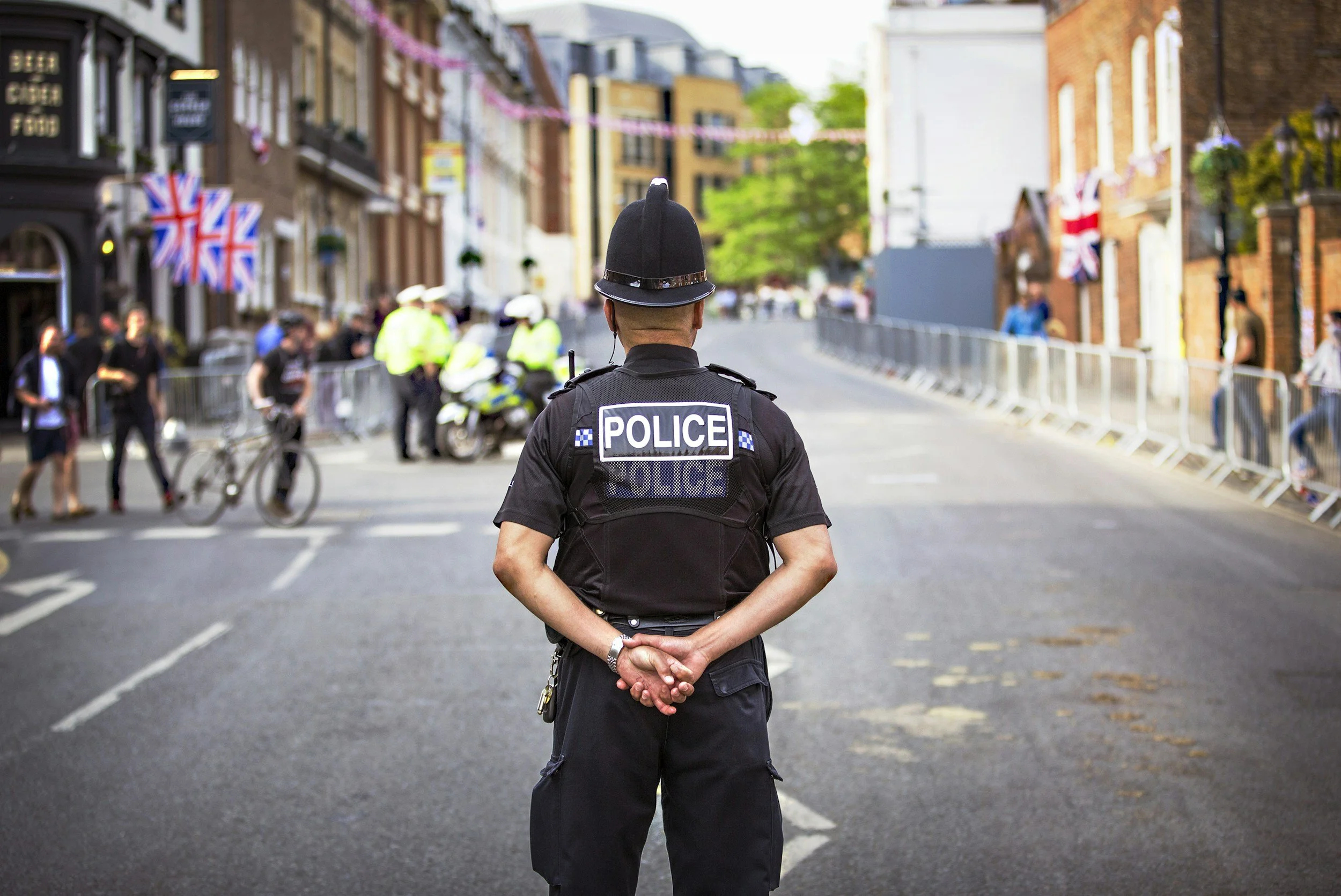
Inside the Growing Argument for a Radical Shift in Who Holds Power
It is an argument that surfaces quietly at first, usually in the corners of online forums or community meetings where people still attend in person rather than sending a sharply worded email. But over the past five years, as trust in British policing has steadily eroded, the idea has begun to make the jump from the fringe to the mainstream.
It goes something like this: What if the United Kingdom adopted the American-style elected sheriff system? What if local communities chose their own law-enforcement leader—one they could hire and fire at the ballot box—rather than relying on a police hierarchy largely steered by Whitehall influence and internal culture? And perhaps more provocative still: Could such a system act as a buffer against government overreach, especially in an era where policing decisions often appear more politically aligned than operationally neutral?
The immediate reaction from most British readers—particularly those with memories of late-night cable documentaries featuring sheriffs with mirrored sunglasses and a fondness for tactical parades—is usually dismissive. Sheriffs are, after all, an American invention, best suited to sprawling counties, frontier nostalgia, and a federal constitution built on an unusual degree of local autonomy.
But beneath that cultural caricature lies a structural idea with a very British appeal: democratic accountability. And for a country facing a crisis of faith in its policing institutions, the question no longer appears quite as eccentric as it once did.
This article explores whether a system of directly elected, operationally independent sheriffs could strengthen British democracy, restore public trust, and prevent political misuse of the police. More importantly, it asks the question few officials dare put into print: Would the UK actually be safer if police leadership were answerable to voters rather than ministers?
A Crisis of Trust No One Can Quite Explain Away
The Metropolitan Police is often held up as the cautionary tale, though similar patterns exist nationwide. From misconduct scandals to widely criticised handling of protests, to the uneasy blurring of police responsibilities during the pandemic, Britain’s police forces have spent the last decade operating under the thick shadows of controversy, operational drift, and increasingly strained relationships with the communities they serve.
The claim often made, usually by government spokespeople, is that these are “isolated incidents.” That argument has worn thin. The numbers do not back it. Public confidence in policing has fallen sharply in national surveys. Reports highlight sluggish response times, inconsistent enforcement priorities, and a perception—rightly or wrongly—that policing decisions now align with political trends rather than evidence-based public safety strategies.
It is into this climate that the sheriff model has begun to drift, silently at first, then louder, as questions grow about whether the UK’s centralised policing structure is, in fact, too centralised to be neutral.
The British model rests on an odd contradiction: police officers are operationally independent, yet policing strategy, funding, national priorities, leadership appointments, public order guidelines, and enforcement emphasis are all deeply influenced by the Home Office. Their supposed independence often exists more in theory than in day-to-day practice. When prime ministers or home secretaries decide what “crimes matter most,” police leadership seldom contradicts them.
The elected sheriff system directly challenges that arrangement.
What a Sheriff Actually Is Stripped of the Hollywood Gloss
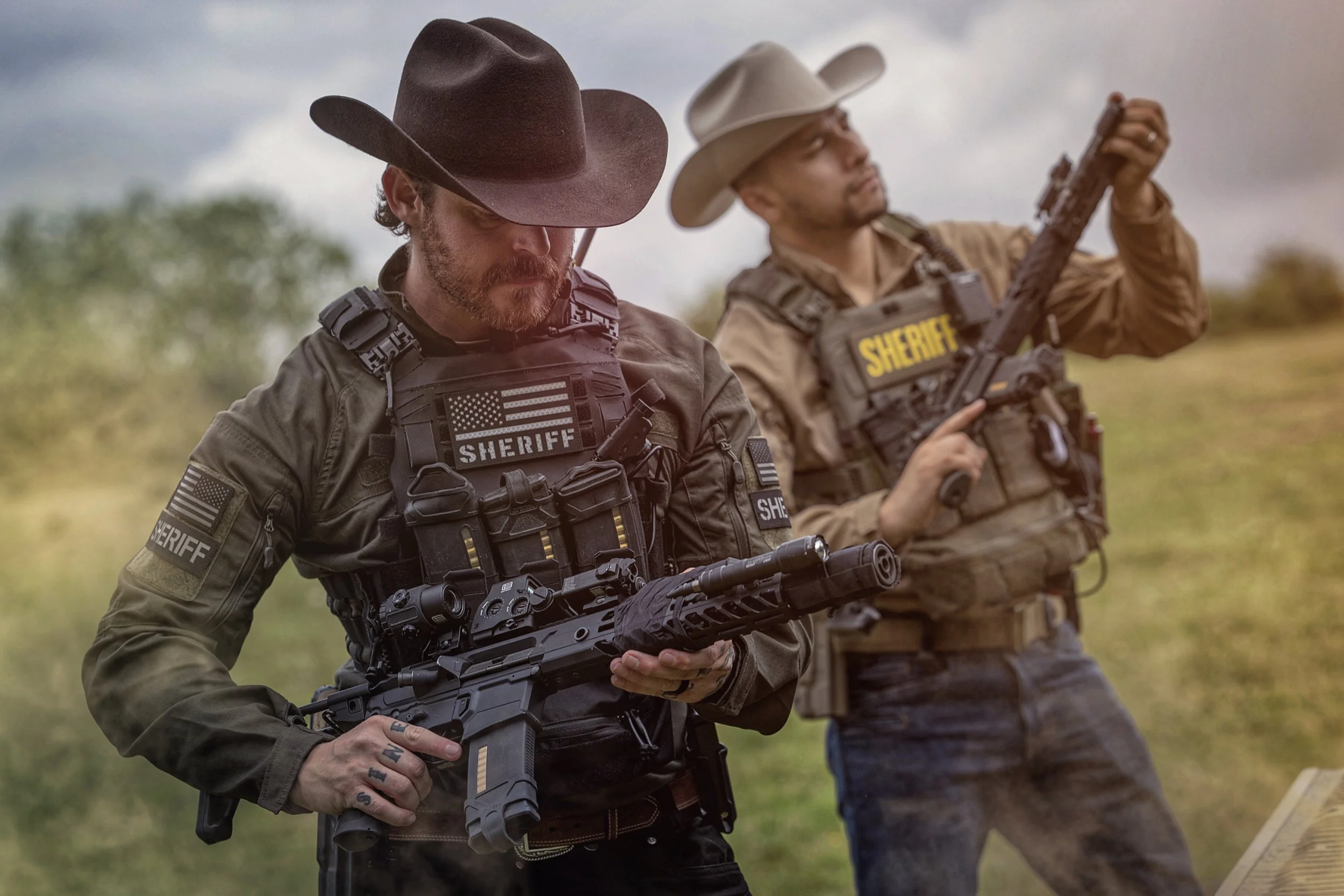
The American sheriff, in structural terms, is not a cowboy with a star-shaped badge. The badge is real, but the public-facing myth obscures the more significant point: sheriffs are operationally independent law-enforcement leaders chosen directly by the people they police. They can neither be hired nor fired by the mayor, governor, legislature, or national government. Their only superior is the electorate and, ultimately, the courts.
That independence gives them extraordinary insulation from political coercion. A sheriff can simply refuse to enforce a directive they believe is unlawful, disproportionate, or contrary to community interests. Whether this is good or dangerous depends, largely, on the sheriff, the law, and the local electorate.
But the democratic theory underpinning the role is straightforward: no government should be able to weaponise policing for political ends. A sheriff is a constitutional counterweight not to crime, but to the state itself.
In Britain, the closest analogue is the Police and Crime Commissioner (PCC), introduced in 2012 to create public oversight. Yet PCCs do not command police operations. They cannot stop a chief constable from adopting a controversial enforcement policy. They cannot intervene if a police force decides to embrace political activism under the guise of community engagement. And they cannot block decisions shaped by national political pressure.
In practice, PCCs provide oversight without leverage. A sheriff would provide the opposite: leverage backed by elected authority.
Could a Sheriff Prevent Political Misuse of the Police?
To understand the argument, one need only revisit the past five years of British governance.
During the pandemic, police officers were frequently thrust into the absurd position of interpreting rules that changed weekly and rarely aligned with lived reality. Enforcement swung wildly: harsh crackdowns in some areas, blind eyes turned in others. Many of these decisions were shaped not by necessity, but by political messaging.
Later, the policing of protests environmental, political, or ideological became a lightning rod for accusations of political alignment. When ministers demanded “toughness,” police appeared tough. When new identity-focused policies gained Whitehall traction, police appeared eager to adopt their vocabulary and symbolism. When controversial public order powers expanded, police forces used them quickly and confidently, sometimes disastrously.
A sheriff system introduces a stabilising force into this volatility. A Home Secretary may issue guidance, but a sheriff is free to respond: “Not in this county.”
This is not hypothetical. In the United States, sheriffs routinely decline to enforce politically motivated directives, particularly those that clash with constitutional protections or local priorities. Sometimes this is controversial; sometimes it is essential.
But the principle remains: no party or minister can turn local law enforcement into a partisan enforcement arm without going through the electorate first.
In Britain, that barrier simply does not exist.
The Argument for Local Control
Britain often speaks about “local policing,” but it rarely practices it. Every region, from Cornwall to Cumbria, is subject to national priorities, national budgets, and national interpretations of legislation. The home secretary of the day exerts substantial influence over what crimes “matter,” which behaviours should be targeted, and which public sentiments should be appeased.
Yet Britain is not uniform. Rural crime in Northumberland has little in common with organised criminal networks in London or Glasgow. Policing in seaside towns bears no resemblance to policing in urban estates. And yet the structure is the same, the leadership ladder is the same, and the strategic oversight is the same.
A sheriff model would place control where policing actually happens: in the region itself.
Supporters argue that this localisation could:
restore trust in communities that feel ignored,
improve responsiveness,
reduce the institutional culture that shields misconduct,
and limit the politicisation that currently flows downward from Westminster.
Critics counter that local control could become local chaos: uneven enforcement, populist sheriffs, inconsistent standards.
Both views are correct. That is precisely what makes the question worth asking.
The Case Against Sheriffs And Why It’s Not Always Convincing
Opponents of the UK adopting a sheriff model tend to repeat three arguments. Each has merit, though none are as airtight as they first appear.
1. “It will politicise policing.”
The retort is painfully easy: policing is already politicised.
From hate-crime reporting metrics to public order priorities to the enforcement of social or ideological trends, police forces in Britain already reflect political pressure.
Sheriffs do not create politicisation; they merely shift political accountability from ministers to voters.
2. “It will cause inconsistent enforcement.”
It already exists.
Ask anyone who has ever reported a burglary in Manchester and in Surrey same week.
A sheriff model would formalise these differences, but also make them transparent. Currently, policing disparity occurs behind closed doors, influenced by resources and leadership culture. Under a sheriff system, disparity becomes a democratic issue. If voters dislike the policy, they can remove its architect.
3. “It’s not culturally British.”
Neither were PCCs, elected mayors, devolved parliaments, or mass CCTV networks until they were. The British state has reinvented itself repeatedly in the last 30 years. The idea that policing must remain structurally frozen because it resembles a Victorian design is not a compelling philosophical argument.
What a UK Sheriff Would Actually Look Like
Strip away Hollywood fantasies. A British sheriff would not be wearing a cowboy hat or patrolling a county on horseback. The likely design would be pragmatic, regulatory, and deeply bureaucratic—very British indeed.
A hypothetical structure might look like this:
The sheriff would be elected every four years.
They would replace the Chief Constable as operational commander.
They would publish clear policing priorities, budgets, and community plans.
They would be bound by national law but free from national political directives.
They could be investigated or removed by judicial process, not by the Home Office.
They would have to maintain national training and standards, but interpret local enforcement as they see fit.
The role would not be a blank cheque. Courts would remain the ultimate check. Parliament would define the boundaries. But the crucial difference is that operational obedience would flow downward from the public, not upward from ministers.
The Implementation Challenge
Any change to policing structures in the UK is a legislative and cultural minefield. Overhauling the system would require rewriting the Police Reform Act, redefining PCC responsibilities, restructuring chief officer roles, and addressing employment protections for serving officers.
It is not a Friday-afternoon Bill. The transition would need to be phased, perhaps piloted in a handful of regions before national expansion. It would require consultation not just with police leadership—who will almost certainly resist—but with civil liberties groups, legal experts, and community organisations.
But Britain has undertaken reforms more complicated than this. The scepticism is organisational, not existential.
Would Sheriffs Actually Improve Public Safety?
There is no iron-clad guarantee. Some sheriffs would be brilliant. Others would be mediocre. A few might be disastrous. But this, supporters argue, is precisely the point: the public would be empowered to decide which is which.
Under the current system, when a police force collapses under scandal or incompetence, the public has no meaningful recourse. Chief constables quietly retire, PCCs promise inquiries, and the Home Office eventually issues a stern report about lessons learned. The cycle repeats.
With sheriffs, failure has a political cost an immediate one. Elections sharpen performance. Accountability discourages complacency.
Sheriffs would not guarantee better policing. They would guarantee accountable policing. And for a growing number of British citizens, accountability is the commodity policing lacks most.
A Hedge Against Future Overreach
The fiercest arguments in favour of sheriffs come not from crime statistics, but from constitutional philosophy. Recent years have seen governments of all parties wield emergency powers with remarkable ease. Pandemic restrictions, protest laws, speech regulations, migration enforcement all have tested the limits of state authority and public compliance.
A sheriff structure introduces friction into this process. Not paralysis—friction. A deliberate slowing of political power as it moves through the layers of the state.
If a government sought to use police to suppress dissent, enforce ideological compliance, or target political adversaries, sheriffs would stand in the way. Not as renegades, but as elected guardians of local legitimacy.
In a stable democracy, such resistance is rarely necessary. In an unstable one, it is invaluable.
Is Britain Ready for This?
The question is no longer academic. Groups from across the political spectrum—civil libertarians, decentralisation advocates, community activists, and even some police officers tired of top-down directives—have begun to argue that Britain’s policing framework is too fragile, too centralised, and too susceptible to political distortion.
A sheriff model will not solve every problem. But it addresses one problem better than anything currently on the table: the concentration of policing power in the hands of national politicians and unelected senior officers.
The British public has grown weary of inquiries that punish no one, scandals that fade without consequence, and policing priorities that appear shaped more by political winds than community needs. In that context, the sheriff system is not an American import. It is a democratic safeguard.
And safeguards only matter when trust wears thin.
Conclusion: The Battle Between Stability and Self-Determination
The UK likes to imagine itself as a nation allergic to radical constitutional change. But the last few decades prove otherwise: referendums, devolved governments, elected mayors, restructured courts, sweeping surveillance laws, unprecedented executive powers. Britain changes frequently just rarely where it matters most.
The policing system remains Victorian in structure but post-modern in dysfunction. Reforming it through cosmetic adjustments has not worked. Public trust does not return because a commissioner gives a press conference. Morale does not improve because operational guidelines are rewritten. Safety does not magically increase because a minister promises a task force.
A sheriff system is not perfect. It is not tidy. It is not safe in the bureaucratic sense of the word. But democracy is not meant to be tidy or safe—it is meant to be accountable.
And perhaps the most telling argument for sheriffs is this:
the loudest opposition to them would come from those who currently wield power without having to answer for it.
For everyone else the public who watch police performance fluctuate, who worry about political influence, who feel increasingly distant from the institutions meant to protect them the arrival of a local, elected, removable sheriff might feel less like a foreign import and more like a long-overdue reclamation of power.
If Britain wants policing that belongs to the people rather than the state, it may be time to ask the question plainly….
Who should the police answer to the government, or the governed?
Until that question is answered, the sheriff debate will not disappear. It will grow. And it may yet reshape British policing in ways the establishment is not prepared for.