When watching the public becomes watching the opposition
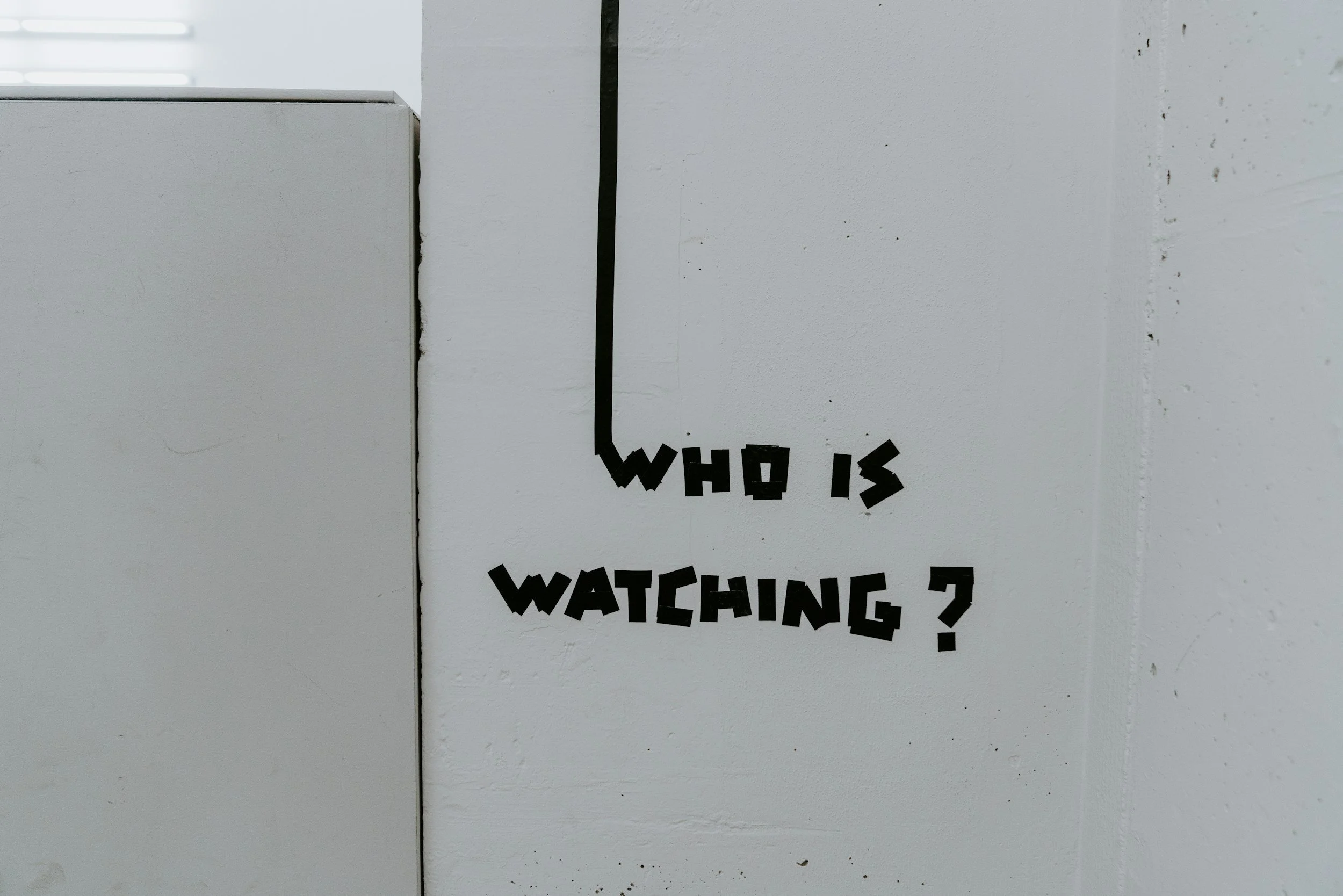
Britain is nowhere near dictatorship. But the machinery of political observation is being built, and the time to question it is now.
A democratic government should always be made to answer a question that is not just whether it has the legal power to watch, restrain or investigate its citizens, but why it believes it needs that power.
Britain's political culture assumes that disagreement with government is normal. Ministers are mocked. Prime ministers are savaged in print. Demonstrators gather outside Parliament, and citizens write furious letters, organise movements and post their opinions online. None of this is a side effect of democracy. It is democracy.
That is why the changing relationship between the British state and political expression deserves more scrutiny than it gets.
An inheritance, and what is done with it
Labour did not invent this architecture. The Online Safety Act passed in 2023, and the Police, Crime, Sentencing and Courts Act 2022 and the Public Order Act 2023 expanded protest powers under the Conservatives. The question for the current Government is what it does with that inheritance, and what it adds.
In 2026, Parliament passed the Crime and Policing Act. It created an offence of concealing identity within designated protest areas, extended the conditions that can be placed on demonstrations, addressed protests near places of worship, and required police to weigh the cumulative effect of repeated protests. Ministers say the measures target intimidation and repeated disruption while preserving lawful protest. Critics see the steady normalisation of a state that makes ever more detailed decisions about when, where and how citizens may visibly oppose it.
Both views deserve a hearing. But the debate looks different alongside a development that gets far less attention.
"We do not monitor individuals"
Government documents confirm that public social-media discussion is monitored and analysed. The Government Communication Service's privacy notice says public social-media and digital data are monitored, and that individual high-engagement posts may be collected to illustrate narratives. Those records can include usernames and opinions, and the Government acknowledges that these may be political or philosophical.
It also says it does not actively monitor individuals.
The National Security Online Information Team, set up to counter misinformation and disinformation that threaten national security and public safety, describes something similar. Its notice says it analyses publicly available material, typically from social-media platforms, which can incidentally contain usernames, handles and political or philosophical opinions. Raw samples are typically kept for up to three months, and analytical products for as long as two years. The team says it does not seek personal information, anonymises where possible, and does no automated decision-making or profiling.
Those safeguards matter. So does the capability. A democracy is entitled to ask what it means to say individuals are not monitored when identifiable posts, usernames and political opinions can still enter government analytical systems.
The sharper question is not whether Britain has become a dictatorship. It plainly has not. It is whether democratic governments are gradually building an infrastructure that makes political observation, classification and intervention routine.
What history does and does not teach
Comparisons with fascism are often abused. Calling every disliked government fascist empties the word of meaning. Mussolini dismantled competitive politics and violently attacked opponents. Nazi Germany destroyed all opposition, subordinated every independent institution, and ended in industrialised genocide. Nothing happening in Britain is remotely equivalent, and that should be said without qualification.
The useful comparison is not equivalence but method. Authoritarian systems rarely announce that disagreement is now forbidden. They redefine categories. The dangerous citizen becomes the extremist, the troublesome publication becomes misinformation, the demonstration becomes disruption, and the dissident becomes someone whose activities deserve observation. Disagreement stops being an argument to be answered and becomes a phenomenon to be managed.
Britain is not Mussolini's Italy, and Westminster is not the Reichstag. A social-media analysis team is not the Gestapo. The warning is narrower. Liberal democracies should be wary of adopting even fragments of that administrative logic, which is to identify narratives, map networks, catalogue information and widen the circumstances in which the state may step in.
From citizen to data point
Never have ordinary people voluntarily published so much about themselves: beliefs, friendships, locations, affiliations, reactions. Governments no longer need an informer in the corner of the meeting hall, because much of it is publicly searchable. Why wouldn't they analyse it?
From a communications department's view, that can look reasonable. Officials want to know whether policy is understood, whether rumours are spreading, whether emergency messages are landing. Companies do the same.
But governments are not companies. Tesco cannot arrest you. A marketing agency cannot impose conditions on your march. A social-listening firm cannot create criminal offences. The state's coercive power makes its collection of political information categorically different, and the bar for transparency should be higher.
Try reversing the politics. Would Labour MPs have been relaxed about a Conservative administration collecting identifiable posts from Labour activists? Would Conservatives be comfortable handing the same capability to a future government of the left? What about environmentalists, anti-war marchers, trade unionists or immigration critics under a government hostile to them? The principle cannot depend on who currently operates the machinery. Civil liberties exist because power changes hands.
Who defines "misinformation"?
Some falsehoods are demonstrable. A photograph can be faked, a quotation invented, a statistic wrong. Foreign intelligence services do run fake accounts posing as British citizens, and government should be able to find them.
But political argument is rarely a matter of clean true and false. One person believes immigration brings a net economic benefit; another believes its effect on housing, wages and services makes current levels unsustainable. Two people can look at identical evidence and disagree. Politics is largely about interpretation, priorities and trade-offs. Once government becomes the arbiter of which narratives count as information and which as misinformation, a line has been crossed.
That does not make every counter-disinformation effort illegitimate. It means we must ask who draws the boundary, and who watches the people drawing it.
The same tension plays out on the streets. Articles 10 and 11 of the European Convention on Human Rights protect expression and assembly, but not absolutely. Proportionate limits are allowed for public safety, disorder and the rights of others. The argument is over where those limits sit.
The House of Commons Library's 2026 briefing records that police powers under the Public Order Act 1986 have been strengthened repeatedly. The Government says its latest provisions are targeted, and that requiring police to consider the cumulative impact of repeated protests does not impose a blanket limit on how often people may demonstrate. That case should be represented fairly.
The civil-libertarian objection is that disruption is frequently the point. The march occupies the road because protesters want to be seen. The crowd makes noise because they want to be heard. A protest that can happen only when nobody is inconvenienced risks becoming officially tolerated theatre. Blocking an ambulance is plainly different from holding a placard in silence. The real question is how much discretion the state should have to decide when disruption becomes unacceptable.
It is not only activists asking. In 2026 the Joint Committee on Human Rights opened an inquiry into security, safety and protest, as civil-liberties groups warned that ever stronger powers could restrict legitimate dissent. That does not prove the critics right. It shows the concern is no fringe obsession but a constitutional argument happening inside Parliament.
The mask question
The new offence of concealing identity in designated protest areas has an understandable rationale. Masked offenders are hard to identify, and some groups use masks deliberately to commit crime. The legislation includes conditions and exemptions, and applies only in designated areas rather than banning masks at every demonstration.
Yet anonymity has a democratic function. An employee protesting their employer may fear dismissal. A whistleblower may fear exposure. A woman who has left an abusive community may not want her face permanently online. An Iranian dissident in Britain may fear for relatives at home. A gay protester confronting a hostile religious group may not want family to find out. Pamphleteers wrote under pseudonyms for centuries because participation can carry social and economic costs even where the state does not persecute. Any limit on anonymity should meet a test higher than police convenience.
The ratchet
Taken one at a time, each measure has a defence. Monitoring helps counter hostile information operations. Protest conditions prevent disruption. Identity rules help catch offenders. Online regulation protects children. New police powers answer changing tactics. Databases improve administrative efficiency.
The concern arises when they are added up. The state becomes increasingly able to know what people say, identify who says it, analyse political narratives, restrict where opposition may happen and set conditions on how it behaves. That is not tyranny. But it is a toolkit a tyrannical government would find very useful.
This is the central lesson of twentieth-century authoritarianism: institutions matter more than intentions. Powers are created for reasons that seem good, and successors inherit them. Databases outlast elections. Precedents outlive ministers. Emergency powers have a way of becoming ordinary ones. A power introduced for an exceptional problem is described as narrow, then the definition widens, another government inherits it, and twenty years later it is routine administration. Britain has seen this in surveillance, counter-terrorism and public-order law. It need not be conspiracy. Police want tools, agencies want information, regulators want clear authority and ministers want problems solved. Civil society exists to push the other way.
So the test should never be "Do I trust this government with this power?" It should be "Would I trust the government I fear most with it?"
The Stasi needed vast human resources: files built by hand, informants recruited, letters opened, calls recorded, reports typed. Today millions of public posts can be searched computationally, networks mapped, old statements retrieved instantly, and AI used to categorise text at scale. No one is suggesting Britain runs a Stasi-style system. The comparison is technological, not institutional. Democracies once benefited, unintentionally, from inefficiency, because governments simply could not know everything citizens said. As technical limits fall away, legal ones must carry more weight.
Surveillance need not lead to prosecution to change behaviour. A citizen skips a demonstration. Someone deletes a post. An employee decides criticising a department is not worth the risk. A campaigner wonders whether a joke will be misread. Most of those fears may never materialise, and that is not the point. Political freedom depends on people believing ordinary disagreement does not make them suspects.
So government owes more than the avoidance of improper monitoring. It must show where monitoring begins and ends. What political material is collected, and when? Can identifiable citizens appear in reports? Who sees them? Can departments search for a named individual? Can data go to police, intelligence agencies or technology companies? How long is it kept? Who decides what counts as misinformation? Can people find out whether they have been processed, challenge it, and correct mistakes? These are not extremist questions. They are what a mature democracy expects its citizens to ask.
The Government's case
The strongest case for these policies is real. Foreign states run influence operations. Terrorists exploit online platforms. False information spreads fast. Repeated protests can badly disrupt residents and businesses. Masked offenders can exploit crowds. Children meet harmful material online. Police manage huge gatherings with limited resources.
Rights also collide: the protester's expression against another person's ability to get to work, the demonstrator's assembly against a worshipper's ability to enter a synagogue, mosque, church or temple without intimidation, the activist's privacy against the need to identify violence, and a user's freedom against a child's safety. Civil-liberties arguments cannot wish these away. The disagreement that matters is over proportionality.
Britain does not have to choose between security and freedom. It needs institutions that defend both: narrow legislation, clear definitions, independent oversight, judicial review, parliamentary scrutiny, transparent retention periods, meaningful data rights, public reporting, and strong protection for journalism, lawful speech and peaceful assembly. And it needs a presumption that criticism of government is legitimate unless there is compelling evidence of crime.
Above all, government must never be allowed to define criticism of itself as a security problem because that criticism is damaging, inaccurate, angry or inconvenient. Government embarrassment is not national harm. Political opposition is not disinformation. Public anger is not extremism. A democracy that forgets this eventually protects authority rather than liberty.
Labour came to power after fourteen years in opposition, years spent using exactly these freedoms: criticising ministers, organising campaigns, attacking legislation and speaking at demonstrations. That should make any government unusually alert to the rights of opposition. But power changes perspective. Measures that look menacing from the opposition benches can look practical from Whitehall. Surveillance becomes analysis, restriction becomes safeguard, control becomes regulation.
The task of journalists, opposition MPs and citizens is to translate the language back. What can government actually do? What can it actually collect? What can police actually restrict? And what happens when a future government uses those powers differently?
The price of democracy
Democracy is irritating. People say stupid things, spread bad arguments, accuse governments unfairly, march down roads, shout outside Parliament, believe conspiracy theories and vote for parties the establishment dislikes. They embarrass ministers and make governing hard. That is the price. Authoritarian rule is administratively easier because opposition can be removed. Liberal democracy chooses inefficiency because the alternative is worse.
The test of free speech is not whether government tolerates praise, but whether citizens can attack its policies vigorously, repeatedly and publicly without becoming objects of state attention. The test of protest is how government treats movements that challenge it. And the test of surveillance is not whether today's officials promise restraint, but whether the system stops tomorrow's from abusing it.
A warning, not an equivalence
There is still an enormous distance between contemporary Britain and the dictatorships of twentieth-century Europe, and it should be defended rather than assumed. Decline does not need jackboots on Whitehall. It can come in increments: a new database, a broader definition, another police power, another exceptional restriction, another monitoring programme, another reassurance that ordinary people have nothing to worry about.
Civil liberties deserve consistency, not partisan outrage. If surveillance is wrong under Labour, it was wrong under the Conservatives. If protest restrictions are dangerous when turned on your own side, they should be questioned when turned on movements you dislike. Political privacy belongs to the left-wing activist and the conservative campaigner, the environmentalist and the immigration critic, the trade unionist, the religious demonstrator and the atheist, the journalist, and the ordinary citizen posting angrily from a kitchen table. Rights that exist only for respectable opinions are not rights. They are permissions, and permissions can be withdrawn.
Constitutional suspicion of the powers of surveillance, information analysis and public-order control is not anti-democratic. It is one of democracy's oldest safeguards. The most dangerous moment is not necessarily when a government announces that dissent is forbidden. It may come much earlier, when society grows comfortable with the idea that dissent should be watched.
Britain is nowhere near the darkest chapters of European history. The point of remembering them is to keep it that way.